
Contested Divorce Either by Husband or Wife
Experienced Contested Divorce Lawyer in Delhi – Safeguard Your Rights
A Contested Divorce lawyer can guide you through the legal proceedings and help protect your rights.
Contested Divorce: Understanding the Legal Process in India
A Contested Divorce arises when one spouse seeks to dissolve a marriage and the other spouse disputes the request, the grounds for divorce or certain aspects of the proceedings. Unlike mutual consent divorce, contested divorce proceedings require the court to examine the disputed issues and determine whether the applicable legal requirements for granting a divorce have been satisfied.
Matrimonial disputes can involve allegations of cruelty, desertion, adultery or other legally recognised grounds, depending on the law governing the marriage. Understanding the relevant legislation, documentary requirements and court procedures is important for individuals navigating a contested matrimonial dispute.
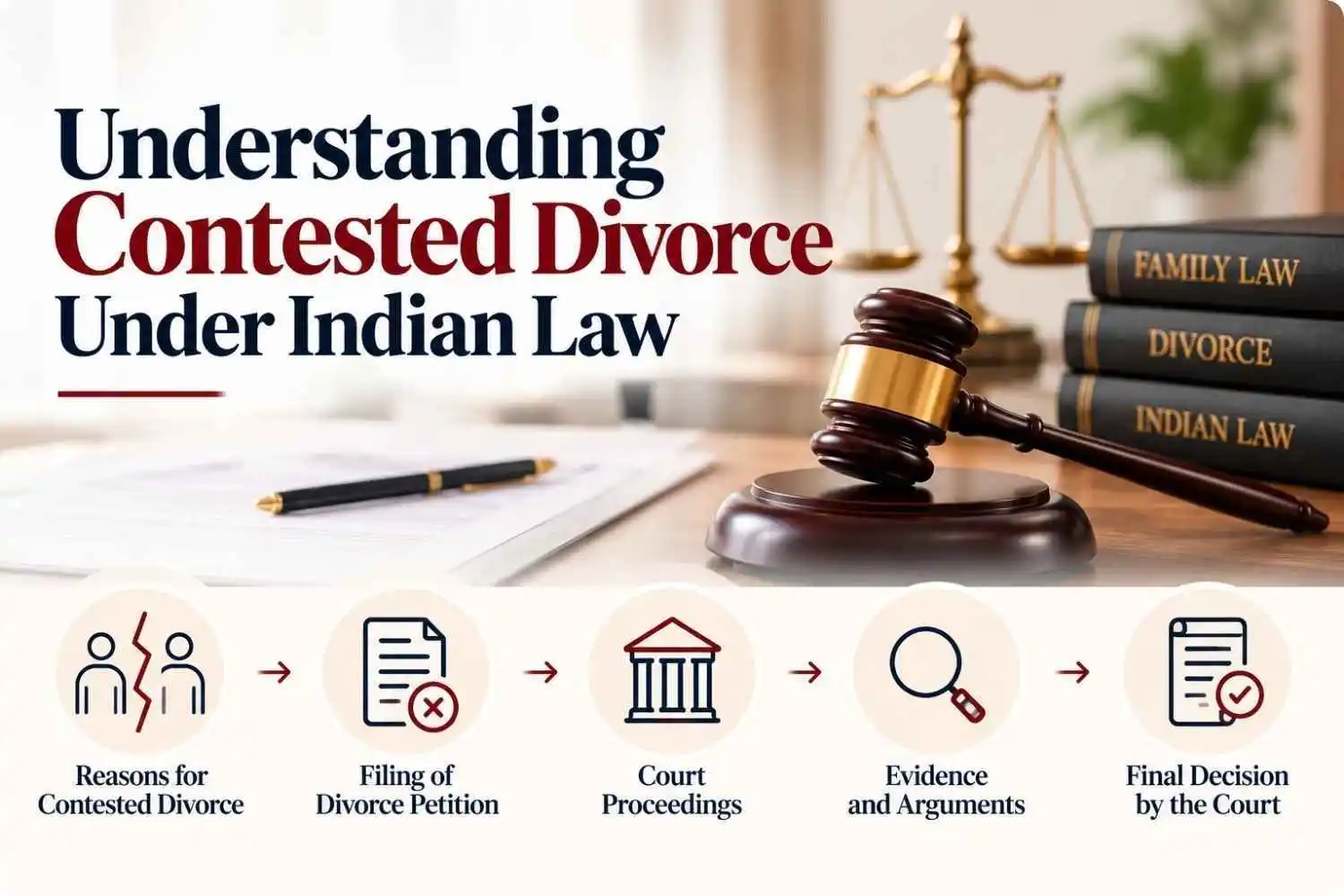
Understanding Contested Divorce Under Indian Law
A contested divorce is generally initiated when one spouse files a petition seeking dissolution of the marriage without a mutual agreement between both parties. The petition must rely on grounds recognised under the applicable matrimonial law.
For example, the Hindu Marriage Act, 1955, specifies grounds on which a divorce petition may be presented by a husband or wife in marriages governed by that Act. Different legal provisions may apply to marriages governed by other personal laws or the Special Marriage Act, 1954.
A Divorce Lawyer in Delhi India, can provide legal assistance in contested divorce proceedings, where the court examines the pleadings, evidence and arguments presented by both parties. The outcome depends on the facts and circumstances of the case and the applicable law.
Contested Divorce by Husband
A contested divorce by husband may arise when a husband seeks dissolution of the marriage on one or more legally recognised grounds and the matter cannot be resolved through mutual agreement.
Depending on the applicable law and circumstances, the issues may involve allegations of cruelty, desertion or other statutory grounds. The husband must establish the relevant legal grounds through admissible evidence, subject to the applicable procedural requirements.
The proceedings may involve preparing the divorce petition, submitting supporting documents, responding to the other spouse’s pleadings and presenting evidence before the competent court. The court independently examines the matter before deciding whether the legal requirements for divorce have been established.
Contested Divorce by Wife
A contested divorce by wife may arise when a wife seeks dissolution of the marriage and the husband contests the petition or disputes the allegations.
Depending on the applicable law, the grounds may include cruelty, desertion or other grounds recognised by statute. Certain matrimonial laws also provide specific grounds or additional rights to wives in defined circumstances.
A contested proceeding may require examination of documentary evidence, communications, witness testimony and other material relevant to the allegations. The court evaluates the evidence and applicable legal provisions before reaching a decision.
Whether a petition is initiated by a husband or wife, the legal requirements depend on the governing legislation and the circumstances of the marriage.
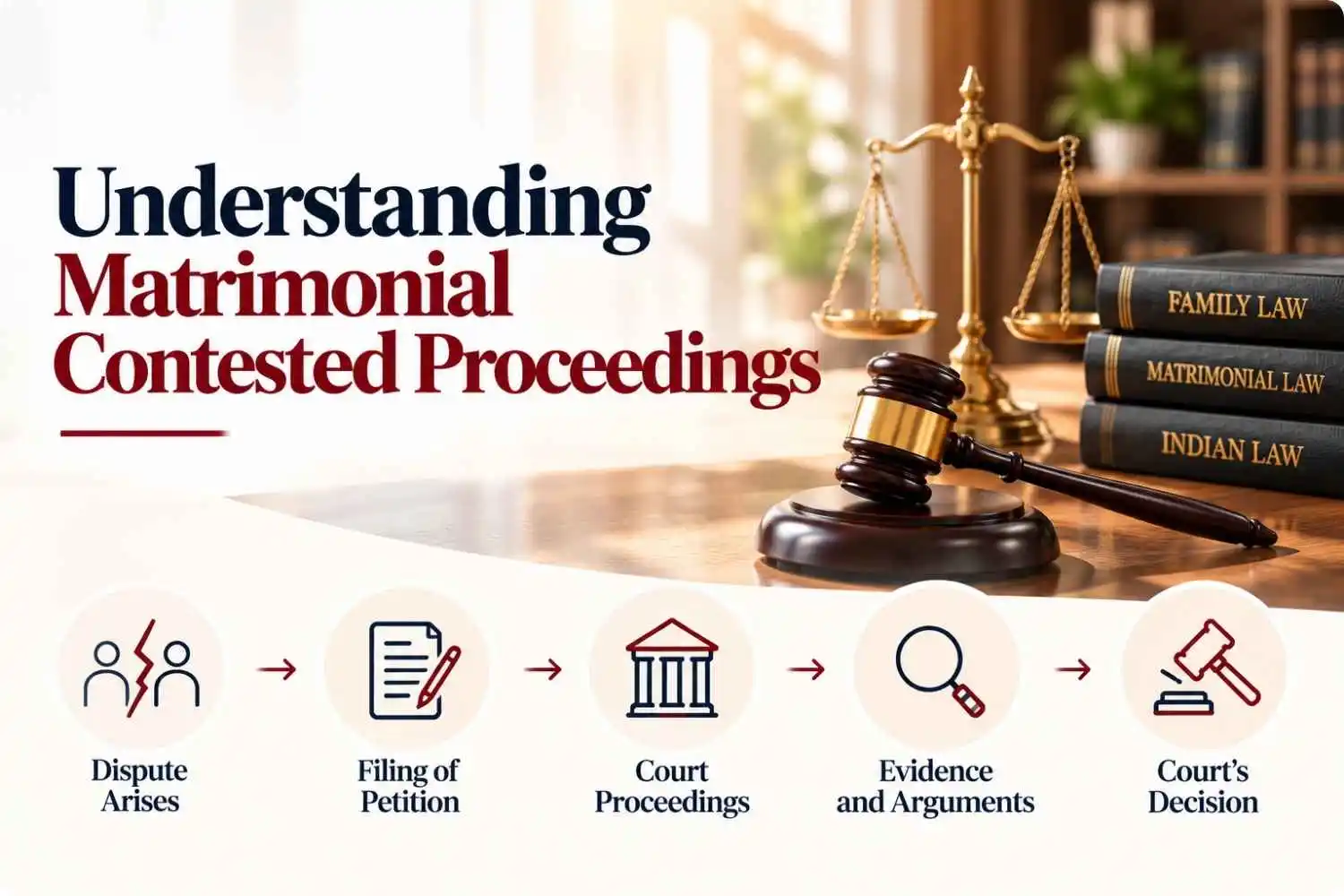
Understanding Matrimonial Contested Proceedings
Matrimonial contested proceedings may involve more than the question of whether a divorce should be granted. Related disputes can concern interim maintenance, permanent alimony, child custody, visitation rights and other family-related issues.
Depending on the circumstances, these matters may be addressed within the divorce proceedings or through separate applications under the applicable law.
Courts consider the relevant statutory provisions, evidence and circumstances when deciding such issues. In matters concerning children, their welfare is a central consideration.
Legal Procedure and Evidence in Contested Divorce
The contested divorce procedure generally involves filing a petition, service of notice, submission of a response, identification of disputed issues, presentation of evidence, arguments and a judicial decision.
Documents that may be relevant include marriage records, financial documents, communications, medical records where relevant, and other evidence connected with the grounds pleaded. The specific evidence required depends on the facts and legal issues involved.
Unlike not contested divorce, which is an informal description that may refer to a matter where no substantive opposition is raised, a contested divorce involves disputed issues requiring adjudication. Even where a petition is not opposed, the court must still consider the applicable legal requirements before granting a decree.
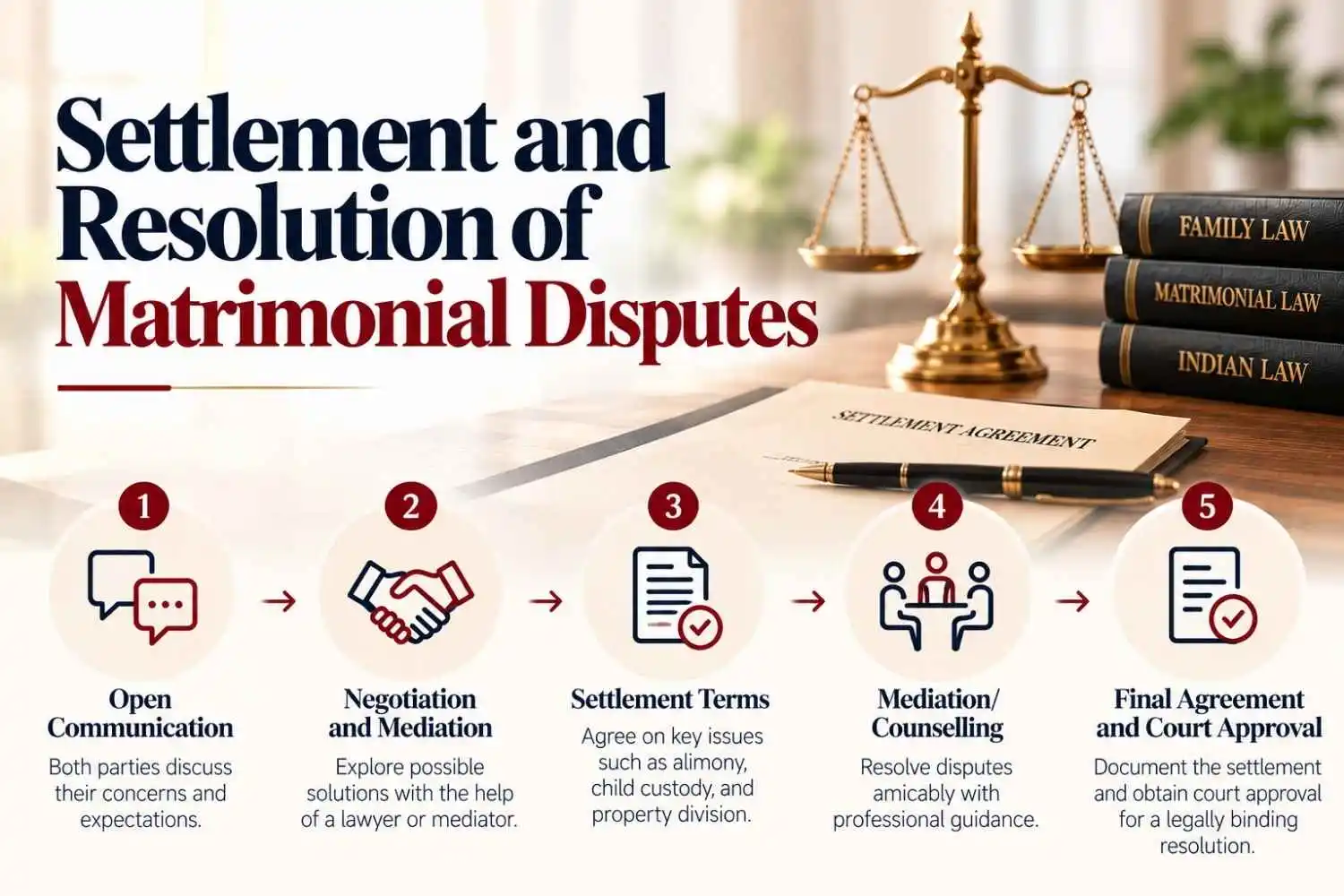
Settlement and Resolution of Matrimonial Disputes
During contested divorce proceedings, spouses may explore settlement or mediation where appropriate. If both parties subsequently agree to seek divorce by mutual consent, they may consider the relevant statutory procedure, provided its legal requirements are fulfilled.
Settlement may address financial arrangements, maintenance, child custody and other outstanding issues. Any agreement should be assessed carefully to ensure that its terms are clear and legally appropriate.
In brief, contested divorce proceedings require careful consideration of the applicable matrimonial law, the grounds pleaded, supporting evidence and procedural requirements. Whether a matter involves a petition filed by a husband or wife, the court determines the dispute according to the law and evidence presented.
This page is intended for general informational purposes and does not constitute legal advice for an individual case or guarantee any particular outcome.