
Mutual Divorce Process Under Indian Law
Experienced Mutual Divorce Lawyer in Delhi – Safeguarding Your Rights
A mutual consent divorce lawyer can guide you through the process while helping protect your legal rights.
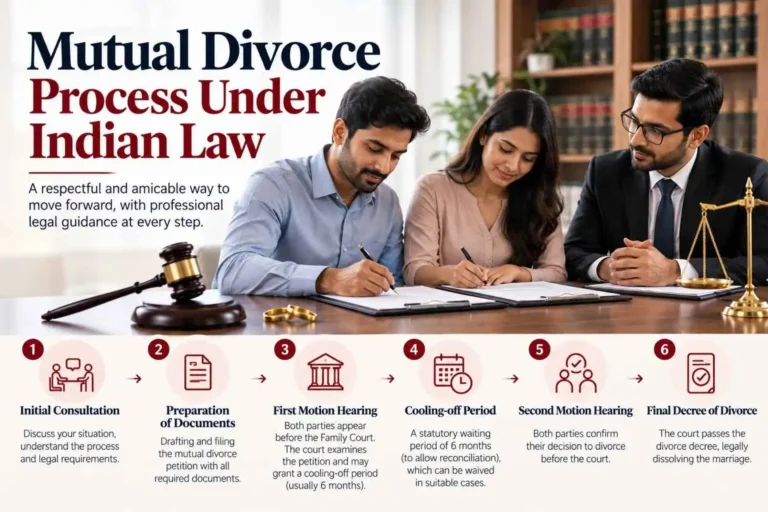
Mutual Divorce: Understanding the Legal Process in India
Mutual divorce is a legal process through which spouses who have decided to end their marriage by agreement can seek a divorce under the applicable matrimonial law. Although both parties agree to separate, the process may involve important considerations relating to maintenance, alimony, child custody, property, financial obligations and other matrimonial matters.
A mutual consent divorce can provide a structured legal route for spouses who have mutually decided that continuing their marriage is no longer viable. Understanding the applicable legislation, preparing the necessary documents and recording settlement terms clearly are important steps in navigating the process.
What Is Mutual Divorce?
Mutual divorce refers to the dissolution of a marriage with the consent of both spouses, subject to the requirements of the applicable law. A mutually agreed divorce generally involves agreement on the decision to separate and, where relevant, arrangements concerning financial matters, children and other outstanding issues.
The term consent divorce is commonly used to describe a divorce sought by agreement between the spouses. However, mutual agreement alone does not automatically dissolve a legally recognised marriage. The parties must follow the applicable legal procedure and obtain the required decree from the competent court.
Mutual Divorce Process Under Indian Law
The mutual divorce process depends on the legislation governing the marriage. For example, Section 13B of the Hindu Marriage Act, 1955, provides for divorce by mutual consent for marriages governed by that Act. Section 28 of the Special Marriage Act, 1954, contains provisions for mutual consent divorce for marriages covered by that legislation.
Under Section 13B of the Hindu Marriage Act, the spouses must generally have lived separately for one year or more, must have been unable to live together, and must mutually agree that the marriage should be dissolved.
The court examines whether the statutory conditions have been satisfied before granting a divorce decree. The applicable requirements may differ depending on the personal law governing the marriage.
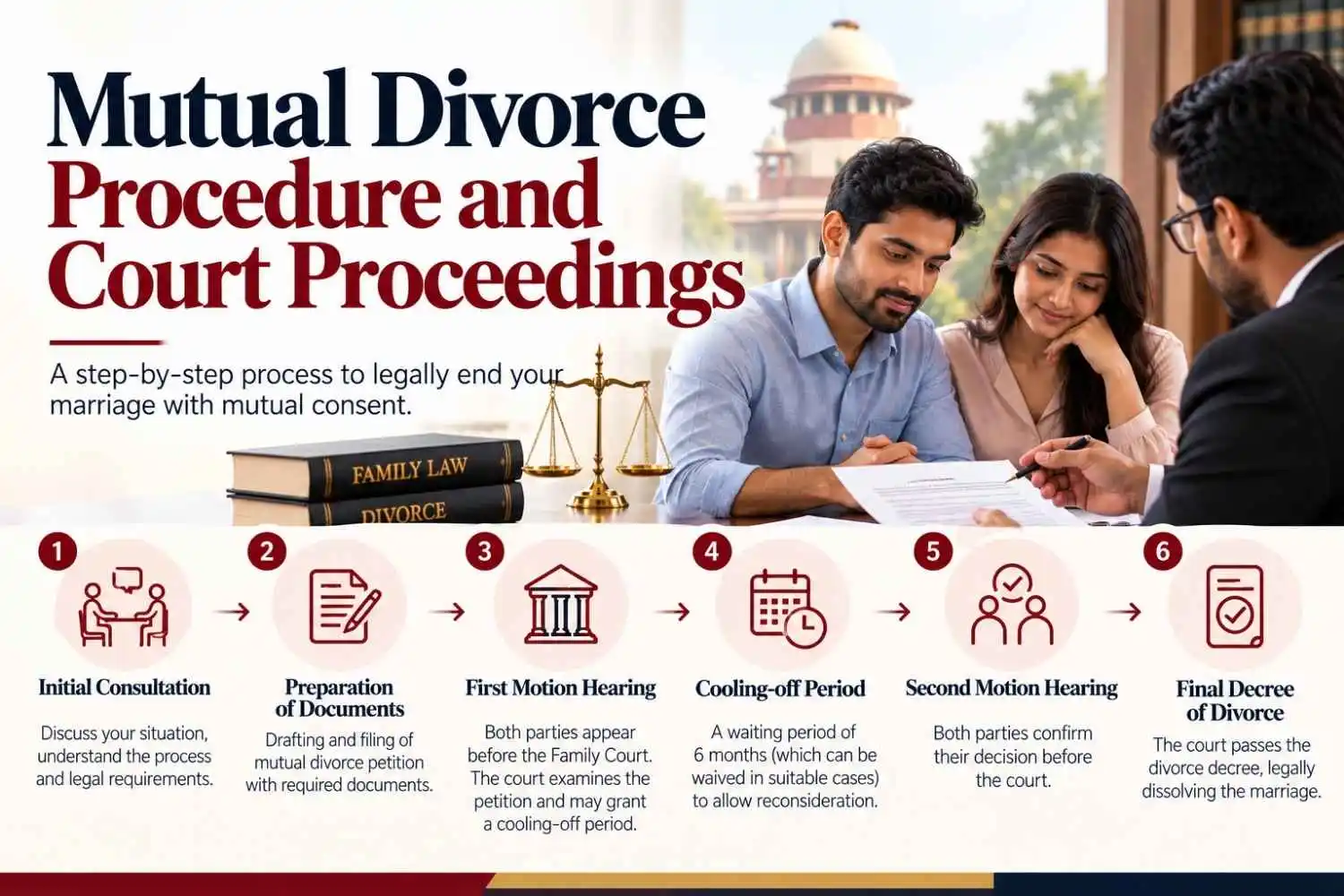
Mutual Divorce Procedure and Court Proceedings
The mutual divorce procedure under Section 13B of the Hindu Marriage Act generally involves the following stages:
- Preparation of the petition: The spouses prepare a joint petition containing the necessary facts and statements.
- First motion: The petition is presented before the competent court, which examines the relevant requirements.
- Settlement arrangements: The parties document agreed terms concerning maintenance, alimony, child custody and other relevant matters, where applicable.
- Second motion: The parties ordinarily proceed with the second motion within the statutory period.
- Divorce decree: The court grants the decree after satisfying itself that the legal requirements have been fulfilled.
Under Section 13B, the second motion is ordinarily made no earlier than six months and no later than eighteen months after presentation of the petition. The court may waive the six-month waiting period in appropriate cases, subject to applicable legal principles and judicial requirements.
A divorce law firm in Delhi with expertise in contested cases can manage these complex proceedings, ensuring evidence, witness statements, and legal arguments are presented effectively.
Mutual Divorce Agreement and Settlement Terms
A mutual divorce agreement records the terms agreed upon by the spouses. Depending on the circumstances, it may address permanent alimony, maintenance, child custody, visitation arrangements, property-related issues, financial obligations and pending matrimonial disputes.
The agreement should clearly describe the parties’ obligations and avoid ambiguity regarding payment schedules, responsibilities and other settlement conditions.
A mutual understanding divorce is sometimes used informally to describe a separation in which both spouses understand and accept the decision to end their marriage. However, a mutual understanding must be translated into the legally required process before the marriage is formally dissolved.
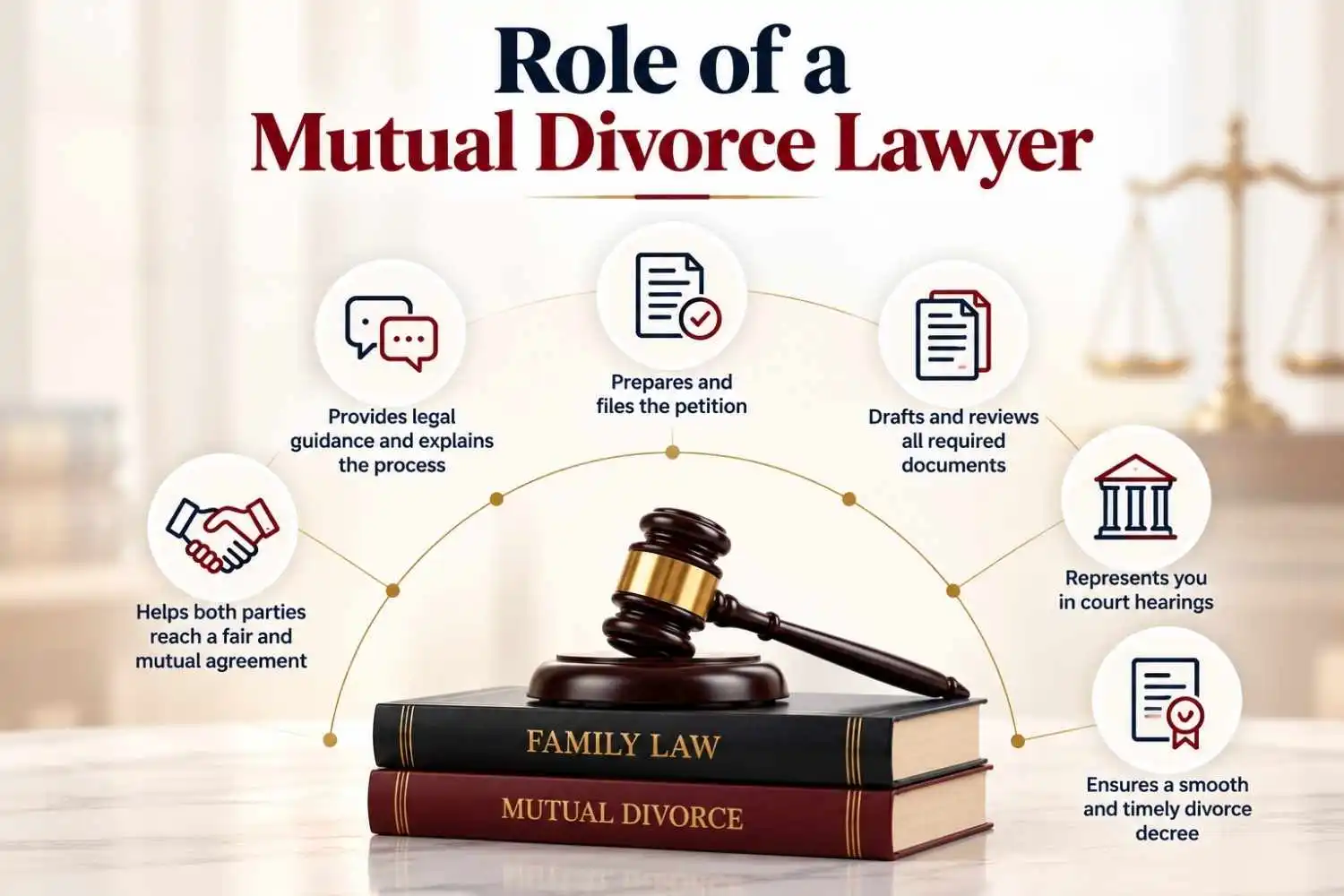
Role of a Mutual Divorce Lawyer
A mutual divorce lawyer may assist with explaining the applicable law, preparing the joint petition, reviewing settlement terms and guiding the parties through court formalities. A mutual consent divorce lawyer may also help identify unresolved issues that need to be addressed before the petition is filed.
People searching for a mutual divorce lawyer near me should understand that the relevant jurisdiction, applicable matrimonial law and circumstances of the marriage determine the appropriate procedure.
Mubarat Divorce and Other Forms of Separation
Mubarat divorce is a form of dissolution of marriage recognised under Muslim personal law in which both spouses mutually desire separation. Its legal requirements and consequences differ from statutory mutual consent divorce under the Hindu Marriage Act.
The applicable legal framework, including relevant personal law principles and statutory provisions, should be assessed according to the circumstances of the marriage.
To conclude, mutual divorce involves more than an agreement to separate. The applicable legislation, statutory conditions, settlement terms and court procedure must be considered carefully. Understanding these requirements can help spouses make informed decisions about the legal steps involved in dissolving their marriage.
This content is intended for general informational purposes and does not constitute legal advice for an individual case.